

7 Signs Your Dog Is Over-Aroused on Walks (And What You Can Do About It)
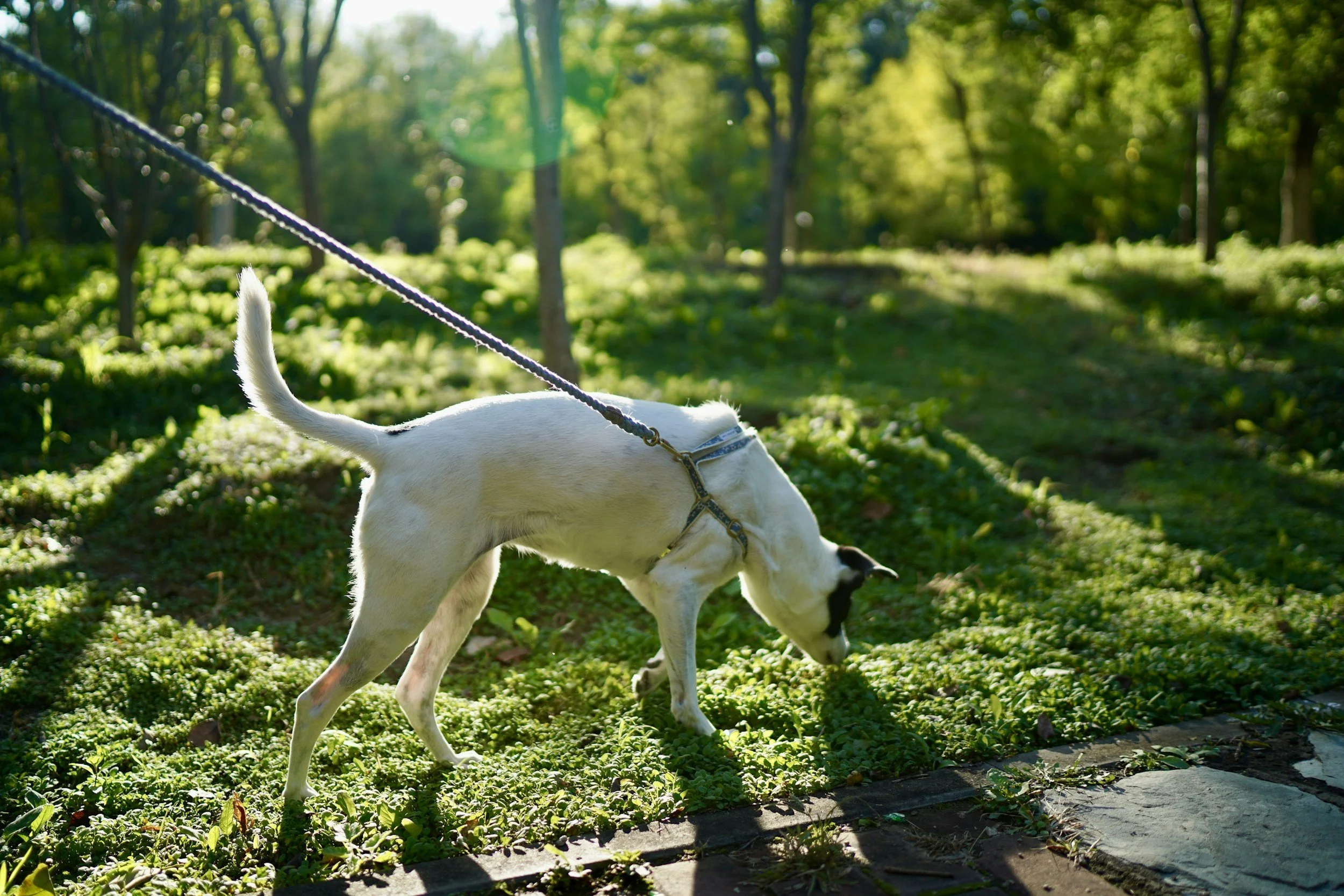
Many dogs behave beautifully at home but become completely different dogs once they step outside.
They pull, ignore recall, fixate on wildlife and seem unable to focus on anything except the environment.
If this sounds familiar, your dog may not be disobedient, they may be over-aroused.
Understanding what over-arousal looks like is the first step toward creating calmer, more connected walks.
What Does “Over-Aroused” Mean?
Arousal refers to the level of excitement or activation in a dog’s nervous system.
A certain level of arousal is healthy and necessary for learning and exploration.
But when arousal rises too high, a dog’s ability to process information decreases.
This is why many dogs:
stop responding to cues
ignore food rewards
become hyper-focused on the environment
struggle to disengage from triggers
When dogs cross this threshold, they are no longer able to think clearly.
They are reacting rather than responding.
1. Your Dog Ignores Food Outside
One of the clearest signs of over-arousal is when a dog suddenly stops taking food on walks.
At home, your dog may happily respond to treats.
Outside, they may ignore food completely or take it in a frantic, distracted way.
When a dog’s nervous system is highly activated, their body prioritises movement and awareness rather than eating.
If your dog won’t take food outdoors, it often means their arousal level is already too high.
2. Your Dog Constantly Scans the Environment
Over-aroused dogs often appear highly alert and vigilant.
Instead of checking in with their handler, they scan constantly for movement, scent or sound.
You might notice your dog:
staring into the distance
sniffing intensely
locking onto movement
struggling to disengage from smells
This shows the dog’s attention is completely absorbed by the environment.
3. Pulling or Frantic Movement on Walks
Dogs who are over-aroused often move quickly and impulsively.
You may see:
constant pulling on the lead
zig-zagging between scents
rushing ahead
difficulty slowing down
This behaviour is often mistaken for poor lead manners, but it is usually linked to high arousal.
4. Fixation on Wildlife or Movement
Dogs with strong prey drive may become intensely focused on birds, rabbits or other animals.
When this happens, they may freeze, stare or suddenly lunge.
In this state, the dog’s brain has switched into hunting mode.
Once that instinct is activated, it can be extremely difficult for the dog to respond to cues.
5. Ignoring Known Commands
Many owners notice that cues their dog knows perfectly at home seem to disappear outside.
Your dog may ignore:
their name
recall
sit or down cues
This is rarely stubbornness.
When a dog is highly stimulated, the thinking part of their brain is temporarily less accessible.
6. Reactivity or Sudden Barking
For some dogs, over-arousal leads to reactive behaviour.
You may see:
barking at other dogs
lunging at people
frustration on the lead
Often these reactions occur when the dog’s nervous system is already overwhelmed.
Lowering overall arousal can significantly reduce these behaviours.
7. Your Dog Struggles to Settle After Walks
Another overlooked sign of over-arousal is what happens after the walk.
Dogs who remain highly stimulated may struggle to settle at home.
They may:
pace
whine
appear restless
struggle to relax
This shows their nervous system is still activated long after the walk has ended.
Why Over-Arousal Happens
Several factors can contribute to over-arousal during walks:
strong prey drive
exciting environments
lack of engagement with the handler
overwhelming levels of stimulation
insufficient mental outlets for natural instincts
Many working breeds, particularly spaniels and other hunting dogs, experience this challenge because they were bred to respond strongly to scent and movement.
How to Help an Over-Aroused Dog
Instead of focusing purely on obedience, successful training often focuses on helping dogs regulate their arousal levels.
This may include:
building voluntary engagement with the handler
teaching calm focus before the walk begins
working below the dog’s stimulation threshold
gradually introducing more challenging environments
channeling natural instincts through structured activities like scentwork
When dogs learn how to regulate their arousal, their ability to listen and respond improves dramatically.
How Scentwork Helps Over-Aroused Dogs
Scentwork can be a powerful tool for dogs who struggle with high arousal.
Because dogs naturally experience the world through scent, structured scentwork gives them a productive outlet for this instinct.
Benefits of scentwork include:
improved focus
increased confidence
calmer mental engagement
reduced environmental scanning
Many dogs who struggle on walks become significantly calmer once scentwork is introduced.
Find out about my scentwork programmes here.
From Chaos to Calm
If your dog feels overwhelming outdoors, you’re not alone.
At Snout and About, I specialise in helping dogs who struggle with prey drive, distraction or environmental overwhelm.
My Chaos to Calm training programme focuses on helping dogs regulate their arousal and rebuild engagement with their handler.
Training is available through:
1-to-1 sessions in Norfolk
online coaching
personalised training plans
scentwork classes
Start Building Calmer Walks
If your dog struggles with over-arousal or distraction outdoors, support is available.
Get in touch to discuss your dog and find the best starting point.